Archives
- 2026-10
- 2026-09
- 2026-08
- 2026-07
- 2026-06
- 2026-05
- 2026-04
- 2026-03
- 2026-02
- 2026-01
- 2025-12
- 2025-11
- 2025-10
- 2025-09
- 2025-03
- 2025-02
- 2025-01
- 2024-12
- 2024-11
- 2024-10
- 2024-09
- 2024-08
- 2024-07
- 2024-06
- 2024-05
- 2024-04
- 2024-03
- 2024-02
- 2024-01
- 2023-12
- 2023-11
- 2023-10
- 2023-09
- 2023-08
- 2023-06
- 2023-05
- 2023-04
- 2023-03
- 2023-02
- 2023-01
- 2022-12
- 2022-11
- 2022-10
- 2022-09
- 2022-08
- 2022-07
- 2022-06
- 2022-05
- 2022-04
- 2022-03
- 2022-02
- 2022-01
-
The structure and activity of GLUT
2022-06-24

The structure and activity of GLUT1 has been most intensively studied in erythrocytes, in which this transporter makes up 10–20% of membrane protein content. Carruthers has shown that, while GLUT1 can exist and transport glucose as monomers, dimers and tetramers, in erythrocytes GLUT1 exists predomi
-
Ghrelin readily crosses the blood brain barrier Banks et al
2022-06-24
Ghrelin readily crosses the blood Tirofiban barrier (Banks et al., 2002, Banks et al., 2008), and recent studies have identified central nervous system sites of action for ghrelin-mediated appetite and hyperphagia (Alvarez-Crespo et al., 2012, King et al., 2011, Schele et al., 2016, Skibicka et al.
-
The waiting time for first arrival of
2022-06-24
The waiting time for first arrival of Annexin V-Cy5 Apoptosis Kit into the dense fraction of 3–4 min at the normal chloride conductance, and about 30 min with inhibition to about 10% of the normal value, signifies that the Gardos channels in the activated cells become maximally or near maximally ac
-
The focused set of additional
2022-06-24
The focused set of additional pyrazole analogs allowed the identification of three additional moderately potent γ-secretase modulators, , and which were subsequently screened in a kinetic solubility assay. Unfortunately, neither the architectural changes in analog nor the integration of trifluoro su
-
Although domain organization had been clearly
2022-06-24
Although domain organization had been clearly delineated by the 4.3-Å structure of T4-γ-secretase [], atomic modeling of the side chains had to wait for the 3.4-Å structure []. In total, 598 residues in the transmembrane region and 632 residues in the ECD were modeled for the four components of huma
-
Developmental studies have reported that some
2022-06-24
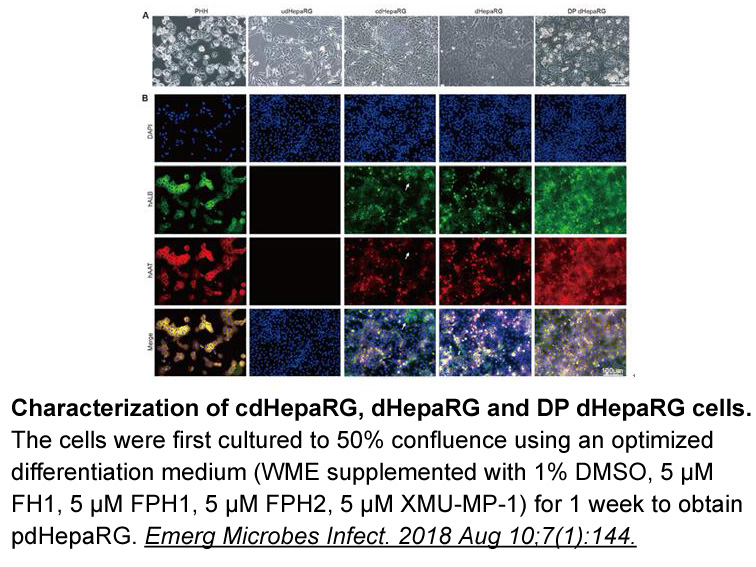
Developmental studies have reported that some subunits of GABAA receptors like α2 and α3 are predominantly expressed during in-utero development, and then substituted for α1 around birth in the rat hippocampus (Brooks-Kayal et al., 2001; Fritschy et al., 1994; Golshani et al., 1997; Kapur and Macdon
-
In conclusion our results showed that FFAR can mediate the
2022-06-24
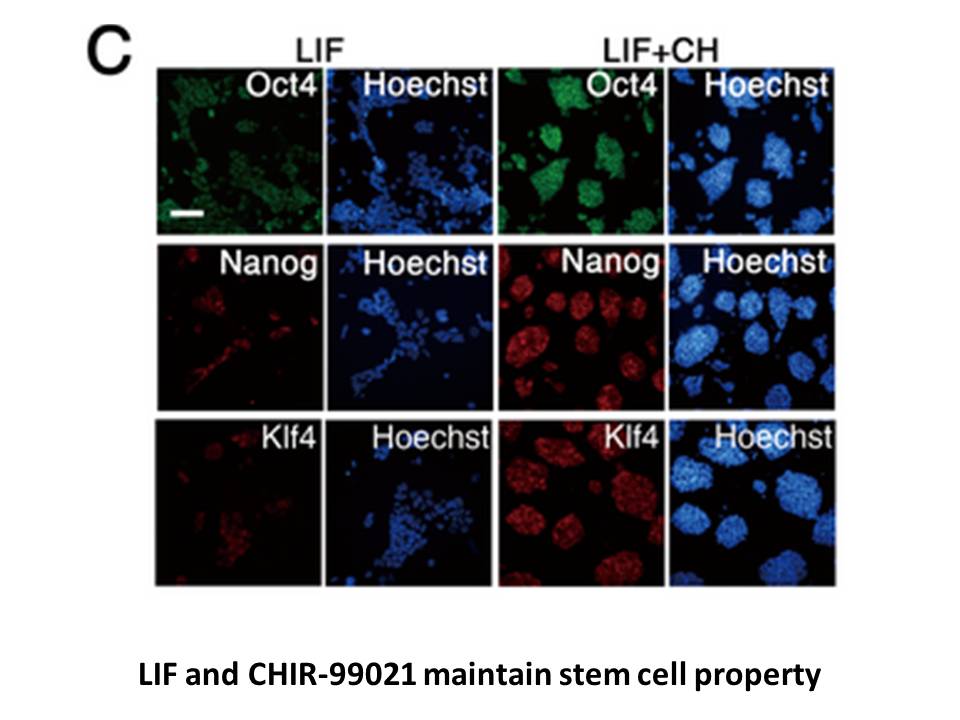
In conclusion, our results showed that FFAR1 can mediate the effect of PIO in attenuating β-cell lipoapoptosis through anti-oxidative stress, which may be related to the activation of the PLCγ-ERK1/2-PPARγ pathway. Our study helps not only to distinguish the role played by FFAR1 in lipotoxicity, but
-
br Site of expression FASTK is expressed
2022-06-24
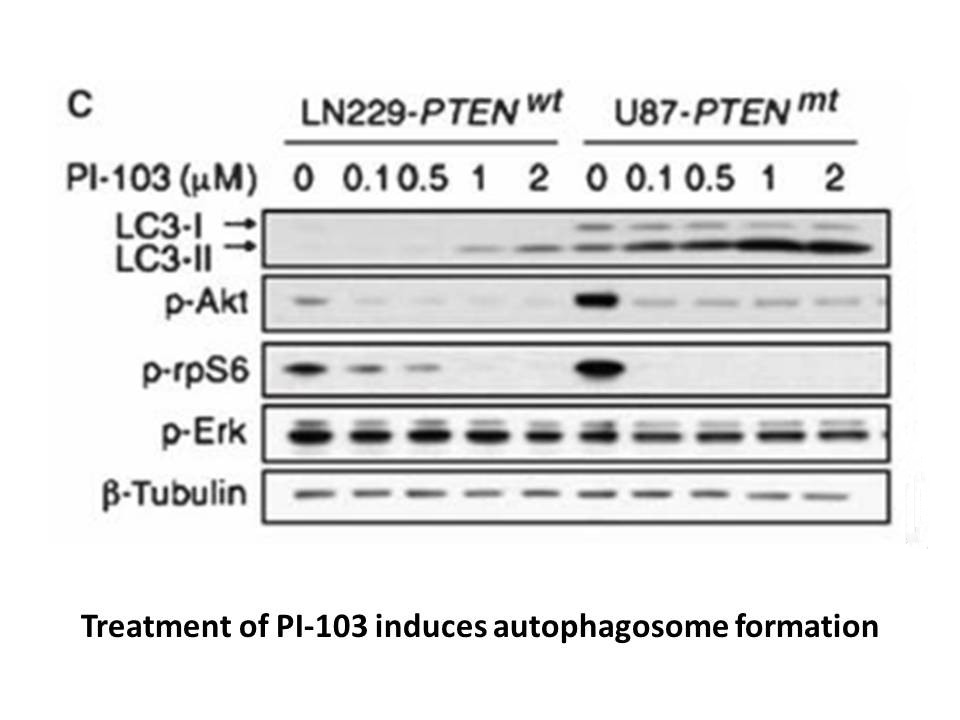
Site of expression FASTK is expressed in various parts of human body including heart, skeletal muscle, brain, placenta, lung, liver, kidney pancreas (Ota et al., 2004) and many other organs (Fig. 1). It has been reported that FASTK is highly expressed in pancreatic tumors, where it is involved in
-
br Introduction Nasopharyngeal carcinoma NPC is a head
2022-06-24
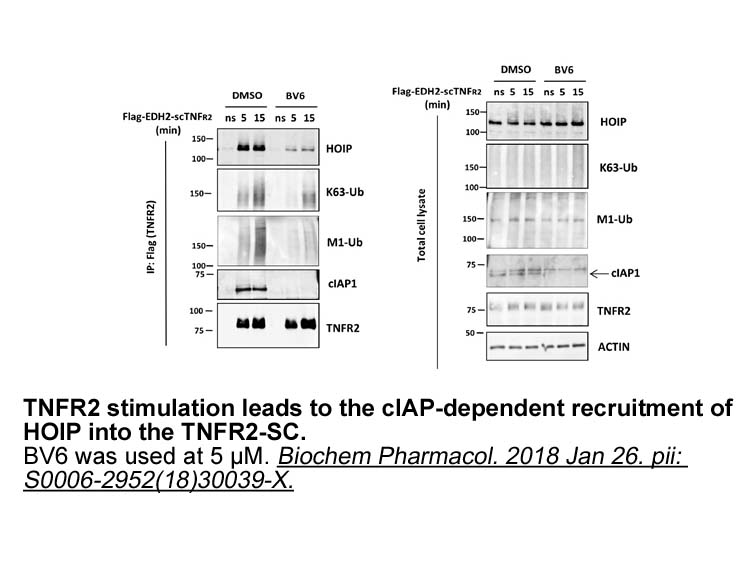
Introduction Nasopharyngeal carcinoma (NPC) is a head and neck epithelial malignancy with high prevalence in southern China, southeast Asia, and northern Africa [1,2]. NPC is caused by a combination of factors: infection with Epstein-Barr virus (EBV), environmental influences, and heredity [3]. A
-
Two recently developed highly specific
2022-06-24

Two recently developed, highly specific EZH2 enzymatic inhibitors, GSK126 and EPZ-6438, are currently in clinical trials for treating lymphomas (Kim and Roberts, 2016). Although these EZH2 inhibitors have shown antitumor effects in lymphoma cells with enzyme-activating mutations of EZH2 (Knutson et
-
br Materials and methods br Results br Discussion The major
2022-06-23

Materials and methods Results Discussion The major findings of the present study are that: 1) the response to inverse agonists may be crossregulated by the activation of either A 779 H1 or H2 receptors, 2) histamine H1 and H2 receptor inverse agonists crossdesensitize the receptor´s respons
-
An azabicyclic compound named S
2022-06-23
An azabicyclic Sulindac sulfide mg named S 38093, (4-[3-(3,3a,4,5,6,6a-hexahydro-1H-cyclopenta[c]pyrrol-2-yl)propoxy]benzamide), was introduced by Servier with H3R antagonist and inverse agonist activity (Sors et al., 2017). The compound contains all the drug-likeness criteria owing to its physicoc
-
We acknowledge some important limitations
2022-06-23
We acknowledge some important limitations to the study. Given that SEER is a national database of abstracted clinical information, there is selection bias as to which patients underwent RS testing. As clinicians are selecting which patients to test, the RS distributions may not reflect the true dis
-
In our study SHH protein overexpression was significantly
2022-06-23

In our study, SHH protein overexpression was significantly associated with lymph node metastasis which is in agreement with the study done by Marechal et al. wherein they have reported that SHH is a prognostic biomarker in PDAC and high levels correlate with lymph node metastasis (Maréchal et al., 2
-
ISCK03 mg br We are now ready to prove the counterpart
2022-06-23
We are now ready to prove the counterpart of Proposition 6.4 for κ-collectionwise normality. This is the pointfree counterpart of the classical result, originally proved in [23], that κ-collectionwise normality is hereditary with respect to -sets. (It may be worth emphasizing that the localic p
7952 records 430/531 page Previous Next First page 上5页 426427428429430 下5页 Last page